 都市と交通
公共交通にビジネスクラスを作れば人は増える? 海外で始まった「まず普通席を良くして」論
公共交通に上位クラスを作れば利用者は増えるのか。Hacker Newsでは、一等席より輸送力と路線網が先だという反論から、徒歩10分をどう捉えるか、スイスと日本の列車まで話が広がりました。
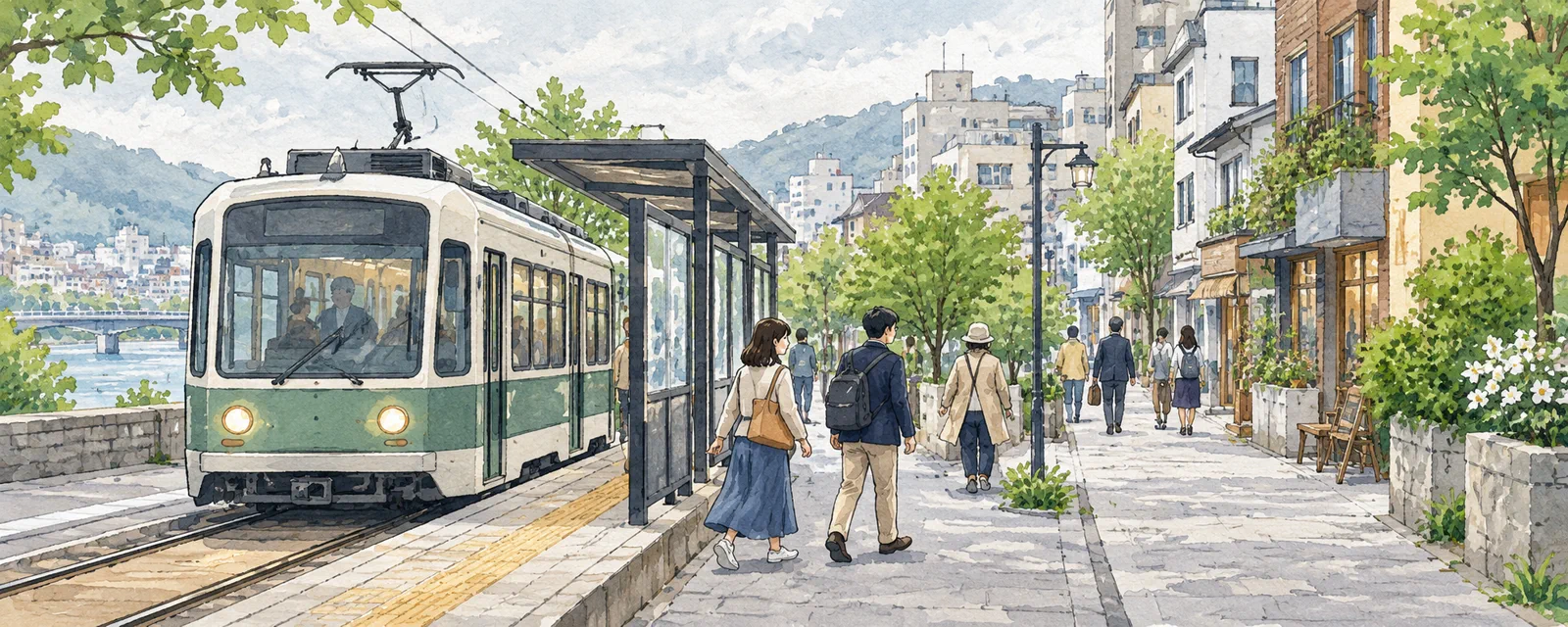
画像:編集部作成のイラスト
反応元の投稿:2023年6月18日 · 当時のやり取りから紹介
海外の反応 15件
その話でロンドンの設計をありがたく思えた。普段は目的地まで行ってから1〜20分歩く。木が多くて気持ちいいことも多いから、歩く機会があるのは好きだ。当たり前だと思うのをやめる。
原文を見る
You just made me appreciate London city's design, I usually get to where I need and then walk from 1 to 20 minutes. I appreciate the chance to walk as it's often nice and leafy. I will stop taking it for granted.この引用の出典を読む ↗
鶏と卵の関係なので、両方だと思う。良い都市設計と良い交通ルート設計は手を取り合う。一方の欠点を、もう一方で補わざるを得ないことが多い。
原文を見る
I think it’s both, because I see it as chicken and egg.Good urban design goes hand in hand with good transit route designs. Often one ends up having to accommodate the flaws in the other.この引用の出典を読む ↗
Google Mapsで見る限り、サンフランシスコで最後の停留所から家まで1マイル歩く場所を見つけるのは難しい。上限は半マイル、つまり10分ほどに見える。先ほどの例に出した6ブロックほどで、オランダの人なら簡単に歩くのに、アメリカ人は車を呼ぶ距離だ。
原文を見る
With Google Maps, I'm having a hard time finding a place in San Francisco which requires a 1 mile walk between the last transit stop and home.The limit seems to be about 1/2 mile, or about a 10 minute walk.Or, about the 6 blocks I mentioned in my earlier anecdote, where Dutch people easily walk while Americans hail a ride.この引用の出典を読む ↗
香港には、より小型で短い周回を頻繁に走るミニバスがある。密度が低い都市で成り立つかは分からない。
原文を見る
Hong Kong has minibuses, which are smaller in size and make more frequent shorter loops. Not sure how viable they are in less dense cities.この引用の出典を読む ↗
アフリカの多くでもそうだ。たとえばチュニジアでは「ルアージュ」と呼ばれ、主要な公共交通になっている。中国本土では「パン車(面包车)」と呼ばれる。
原文を見る
Much of Africa also, eg. in Tunisia they are known as louage and constitute the primary form of public transport. In mainland China they are called "breadvans" (面包车).この引用の出典を読む ↗
自分は偏っているのかもしれないが、道路交通の影響を受けない鉄道や地下鉄の話だと思っていた。
原文を見る
Maybe I'm just biased, but I assumed they were talking about trains and metros which aren't affected by traffic.この引用の出典を読む ↗
その通り。主に鉄道と地下鉄を考えていた。ただし、この議論はバスにも当てはまる。バスの台数を増やさずに新しい「一等席」を入れれば乗客容量は減る。バスを増やすなら、容量が増えたことだけで利用者数を増やせるので、一等席を導入する意味はない。
原文を見る
Yes, you are right: I was mostly thinking of trains and metro systems. In any case though, the argument still applies to buses. Adding a new "first class" without increasing the bus fleet would decrease passenger capacity — and if the bus fleet were to be extended, then introducing a first class would be redundant anyway given that the greater passenger capacity would be enough to increase passenger numbers by itself.この引用の出典を読む ↗
指摘する価値はない。そういうものは新幹線と、何時間も通勤し得る路線にしかない。ビジネスクラスはすでに仕事で移動する人のためにある。飛行機やAmtrakも使える。 日本で毎日使う勤労者もいるだろうが、毎日グリーン車に6時間乗る地獄を、どこかで再現する価値はない。
原文を見る
It's not worth pointing out because those only exist on the shinkansen and routes where you could theoretically be commuting for hours. Business class exist for people that travel for work already, you can use a plane or Amtrak.I'm sure there are workers in Japan who are using it daily, but having to be on the train for six hours in a green card everyday is not a hell worth recreating anywhere else.この引用の出典を読む ↗
Amtrakにも、アメリカの一部フェリーにも、複数のチケットやサービスの段階がある。提案されているのはそれそのものではなく、サービスと利便性を一段上げることだと思う。
原文を見る
Amtrak also has multiple levels of tickets/service as do some US ferries. I don’t think that’s quite what they are proposing, but rather a step up in terms of service and convenience.この引用の出典を読む ↗
スイスの鉄道には一等車がある。でもスイスの鉄道システムは素晴らしいので、自分なら普通車で満足する。あそこで車は運転しない。 一度、列車にバッグを忘れた。届け出ると同じ日に、見つかったという確認メールが来て、郵送か好きな駅での受け取りかを聞かれた。そのサービスは20ユーロだったが、通勤カードを持っていたので10ユーロしか払わなかった。
原文を見る
In Switzerland, trains do have first-class. The train system in Switzerland is wonderful, so I’d settle for regular class. I would not drive a car there.I forgot my bag on the train once. I reported it and they emailed me on the same day confirming they had found it and asked if I wanted it mailed to me, or I wanted to pick it up at a station of my choice. That service cost €20, but because I had the commuter card, I only paid €10.この引用の出典を読む ↗
世界中の多くの鉄道路線には、すでにクラスという考え方がある。一等車はより広く、設備も良い。
原文を見る
Many train lines across the world do have the concept of classes. First class trains have more room and nicer amenities.この引用の出典を読む ↗
昔は三等車まであった。人に使わせないよう「説得」するため、鉄道会社はその車両にすすをまくようになった。
原文を見る
Long ago, even 3rd class; to "persuade" people not to use it, the rail companies took to spreading soot in those compartments https://www.weirduniverse.net/blog/comments/soot_bag_systemこの引用の出典を読む ↗
アメリカでは公共交通をもっと速くする必要がある。公共交通は車で行くより1.2〜2倍長くかかる。
原文を見る
In the usa, the transit needs to be faster. Public transit is 1.2-2x longer than driving.この引用の出典を読む ↗
オランダのすべての列車には一等車の選択肢がある。主にビジネスの人が使う。
原文を見る
All trains in the Netherlands have a first class option. Mostly used by business people.この引用の出典を読む ↗
一等席の話だったのに、最後は「普通席で十分と思えるか」に着地しました。座席より先に、帰り道が信用できることなのかもしれません。
MORE TO EXPLORE
同じテーマの話
救急隊まで靴を脱ぐの? 海外が割れた「床より命だろ」「靴を動かすな」論争
玄関で靴を脱ぐ救急隊。そして善意で靴をそろえる家族。日本の作法が非常時にぶつかったとき、海外では『床より先に命を見ろ』と『靴を動かすな』が飛び交いました。

新築なのに住所が地図にない! 横浜のスレ主、宅配便を外で探す羽目に
新築の家がGoogleマップに載らず、配達員は迷子、スレ主は病院の裏で待機。『三年直らない』『郵便屋だけは覚える』という海外在住者の実体験が集まりました。

南米旅行者、日本で道を聞いたら店員が職場を出て案内 →「旅行には最高、住むなら別の話」
道を聞けば仕事を抜けて案内、深夜の路地でも気を張らなくていい。一方で、カードが通らない、例外に弱い、常に周囲を気にする──南米の旅行者と在住者が、日本の居心地を語りました。
コメント 0件
まだコメントはありません。
この記事への感想を気軽にどうぞ。
原文を見る
この引用の出典を読む ↗